
![A view of the main grandstand of Tokyo Racecourse.
[Source: Sports Nippon Keiba, Sponichi Keiba]](https://mbspyglass.org/wp-content/uploads/2026/01/RabadonJRA-2-1.png)
It’s a new year, and with it comes a brand new season of Japan’s most popular public betting sport – horse racing. The Japan Racing Association opened its 2026 season on Sunday, Jan. 4, with two established International Grade Three races, the Nakayama Kimpai, run at Nakayama Racecourse on turf over a distance of 2000m, and the Kyoto Kimpai, run at Kyoto Racecourse on turf over a distance of 1600m. For the first time since 2015, the JRA’s opening race day paired these two races together as a double on the same day, a rare occurrence known as the “East-West Kimpai” by racing fans in Japan. The season is scheduled to come to a close on Sunday, Dec. 27, with the Grade One Arima Kinen, one of Japan’s most famous and important races, run on turf at Nakayama Racecourse over a distance of 2500m.
The 2026 race calendar is packed with highlights, continuing with a multitude of major races each month. Early on, some very exciting International Grade One races are scheduled for February and March – the appropriately-named February Stakes, which will take place at Tokyo Racecourse on Sunday, Feb. 22, and the Takamatsunomiya Kinen, scheduled for Sunday, Mar. 29 at Chukyo Racecourse, the former being run on dirt over a distance of 1600m and the latter being run on turf over a distance of 1200m.
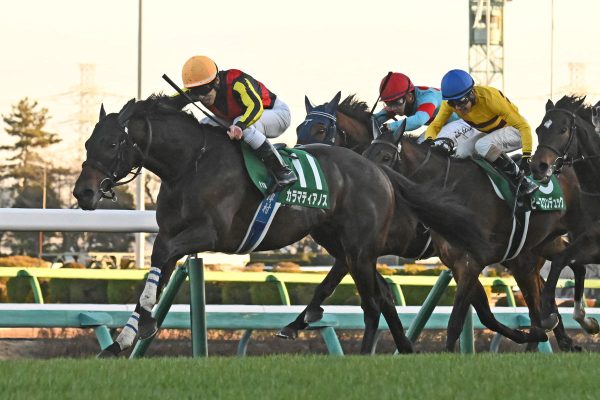
Later, in early April, the start of the Japanese classic races and the first leg of the Japanese Fillies’ Triple Crown, the Oka Sho, run at Hanshin Racecourse on turf over a distance of 1600m, will be run on Sunday, April 12, and a week after that, the Satsuki Sho, the first leg of the nationally revered Japanese Triple Crown, will happen on Sunday, April 19, 2026. The calendar is expected to bring more exciting classic races coming close to the halfway mark of the season, with the second leg of the Japanese’ Fillies Triple Crown, the Yushun Himba (Japanese Oaks) anticipated on Sunday, May 24, 2026, and the “mother of all races” in Japan, the Tokyo Yushun (Japanese Derby) planned for Sunday, May 31, 2026. Both these races are run on turf over a distance of 2400m at Japan’s flagship horse racing venue, Tokyo Racecourse. The JRA announced no new rule changes this year, meaning that race conditions will stay mostly the same, but event-wise, the Grade 3 Hankyu Hai, scheduled for Saturday, Feb. 21, 2026, will move from Kyoto Racecourse to Hanshin Racecourse.
This year, fans will be watching many stars from 2025. Four-year-old horse Forever Young was voted 2025 Horse of the Year, and also won the awards for Best Older Colt and Best Dirt Horse, after an outstanding season, winning three of his four starts, including the Saudi Cup, the world’s richest horse race, and the Breeders’ Cup Classic, the main stage for the best dirt horses from all over the world. Meanwhile, three-year-old Museum Mile snagged the honor of Best Three-Year-Old Colt, after a season that included victories in the Satsuki Sho and the Arima Kinen. His filly counterpart, Embroidery, was named Best Three-Year-Old Filly after winning both the Oka Sho and the Shuka Sho, nearly completing the Fillies’ Triple Crown. Eyes are also on four-year-old mare Regaleira, winner of last year’s Queen Elizabeth II Cup and the award for Best Older Filly or Mare, and seven-year-old stallion Satono Reve, who won last year’s Takamatsunomiya Kinen. These horses will become some of the top contenders for 2026.
When it comes to jockeys, Frenchman Christophe Lemaire, who was the leading jockey in 2025, is expected to continue this trend in 2026. Last year, Lemaire rode 140 winners to clinch his eighth straight JRA riding championship. Rising star Ryusei Sakai, Forever Young’s regular jockey, was the richest jockey in Japan in terms of total prize money last year. On the trainer’s side, Haruki Sugiyama’s stable reached number one in the win standings, with most of his wins being in graded races. His stable’s horses finished in the top three of more Grade One races than any other stable. Yoshito Yahagi, Forever Young’s trainer, also topped the total earnings ranking that same year.
Public interest in horse racing within Japan remains high according to recent trends, and is anticipated to stay high this season. In 2024, the JRA reported a total revenue of ¥3.364 trillion, the fifth straight year above the ¥3 trillion mark. With the influence of today’s tech, much of the betting is moving online, and live race streaming as well as online wagering are helping engage more fans. The JRA’s mobile app has already passed over two million downloads. As the 2026 season is underway, both the JRA and the fans supporting it are eagerly looking forward to another big year for the Japanese horse racing industry.
Sources: Official English JRA website (japanracing.jp), Netkeiba (en.netkeiba.com), and world-tote.org



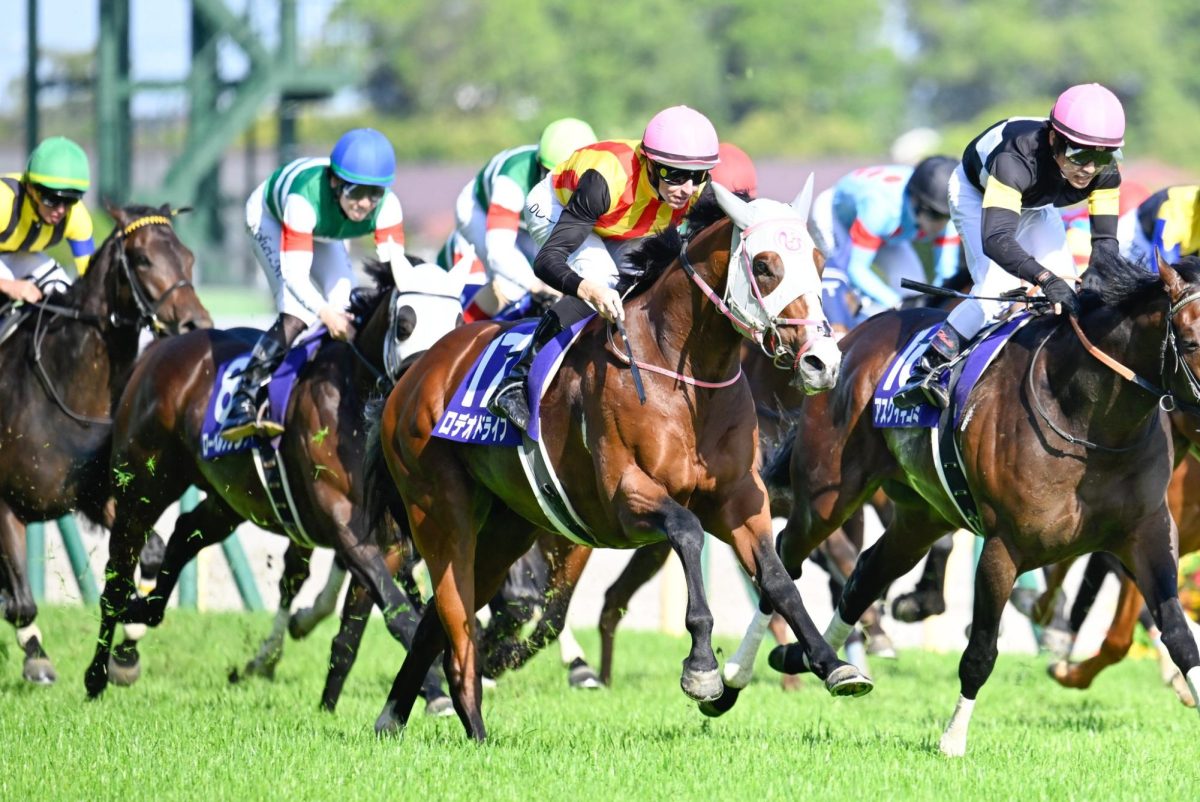

![Lovcen narrowly beats Realize Sirius (far right) towards the line to claim the Satsuki Sho. [Source: @horseracing924 on Instagram]](https://mbspyglass.org/wp-content/uploads/2026/05/RabadonSatsuki-Sho-1.jpg)