
Currently, students all over the world are facing new challenges every week with their workload, especially those in high school and college. The overwhelming amount of work that students are assigned each week can easily trigger students to look for easy ways out of the stress – unfortunately, for many students, this also means using AI.
Many students, in the face of stress, will turn to using AI to complete their assignments, as it can be quicker, easier, and sometimes even produce better quality work. However, the recent rise of AI usage doesn’t just affect the student using it; it impacts every student in their class, school, and possibly even future students as well.
Teachers have recently begun to implement AI checking policies. They will run essays, presentations, and other big projects through an AI detector, looking for any possibility that the assignment wasn’t done honestly. While this can be a great tool for teachers to use, especially as AI becomes more complex and harder to identify, the detectors used are never 100% accurate.
All over social media, you will find horror stories of college students who have worked day and night to complete an assignment, yet when it is run through an AI detector, it comes up as AI-generated. “I spent hours working on this assignment,” said TikTok user @cyclebreakingclub, “Hours. And the teacher’s trying to say that it’s AI. Like, I’m sorry that I talk normal, like what do you want from me… So now I have a 0, and the teacher thinks I’m using AI for everything.” Despite many students’ efforts to combat a false accusation, teachers and professors rarely seem to believe the student, resulting in unfair failing grades across the board.
Despite the mistrust that teachers now have for their students, especially those with a record of using AI, many educators and district employees are still hesitant to fully ban AI. When used improperly, AI can damage a student’s reputation; however, AI has found many positive uses inside the classroom.
As AI has become more prevalent in our lives, many technology companies have adopted its use, most clearly in browsing services. A simple question on Google will prompt the response of their “AI Overview,” an AI compilation of many sources with a concise and clear answer to your question. Recently, Google has also come out with its new “AI Mode,” an even more advanced tool. These types of tools can be incredibly beneficial to students. From simple overviews of a topic they didn’t understand, to helping them understand the significance of an event, Google’s AI Mode and AI Overview have been used to help educate students.
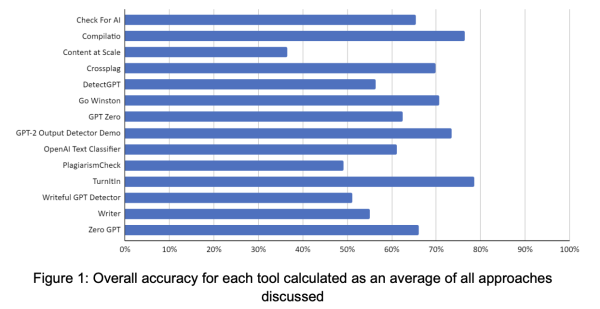
Even with these positive uses of AI technology, there is no doubt that the rise of AI has put hardworking students at risk of failure, all because an AI detector was wrong. The benefits of catching the few students who did use AI to write their essays for them do not at all outweigh the consequences of false accusations of using AI. Students not only fail assignments, but they also fail classes, and some even are at risk of getting kicked out of their college or university, simply because of a false AI accusation. AI technology is a huge threat to students across the world; a false accusation can destroy students’ education, and the benefits of AI in education will never outweigh the number of students being falsely accused and punished for something they didn’t do.

![Umi Sushi Morro Bay. [Source: Visit Morro Bay]](https://mbspyglass.org/wp-content/uploads/2026/05/Umi-sushi_3E8C3621-5056-A36A-062A18D5069BFE34-3e8c35ce5056a36_e45adf5f6bc0c5c2a30a39868f44eab6.jpg)