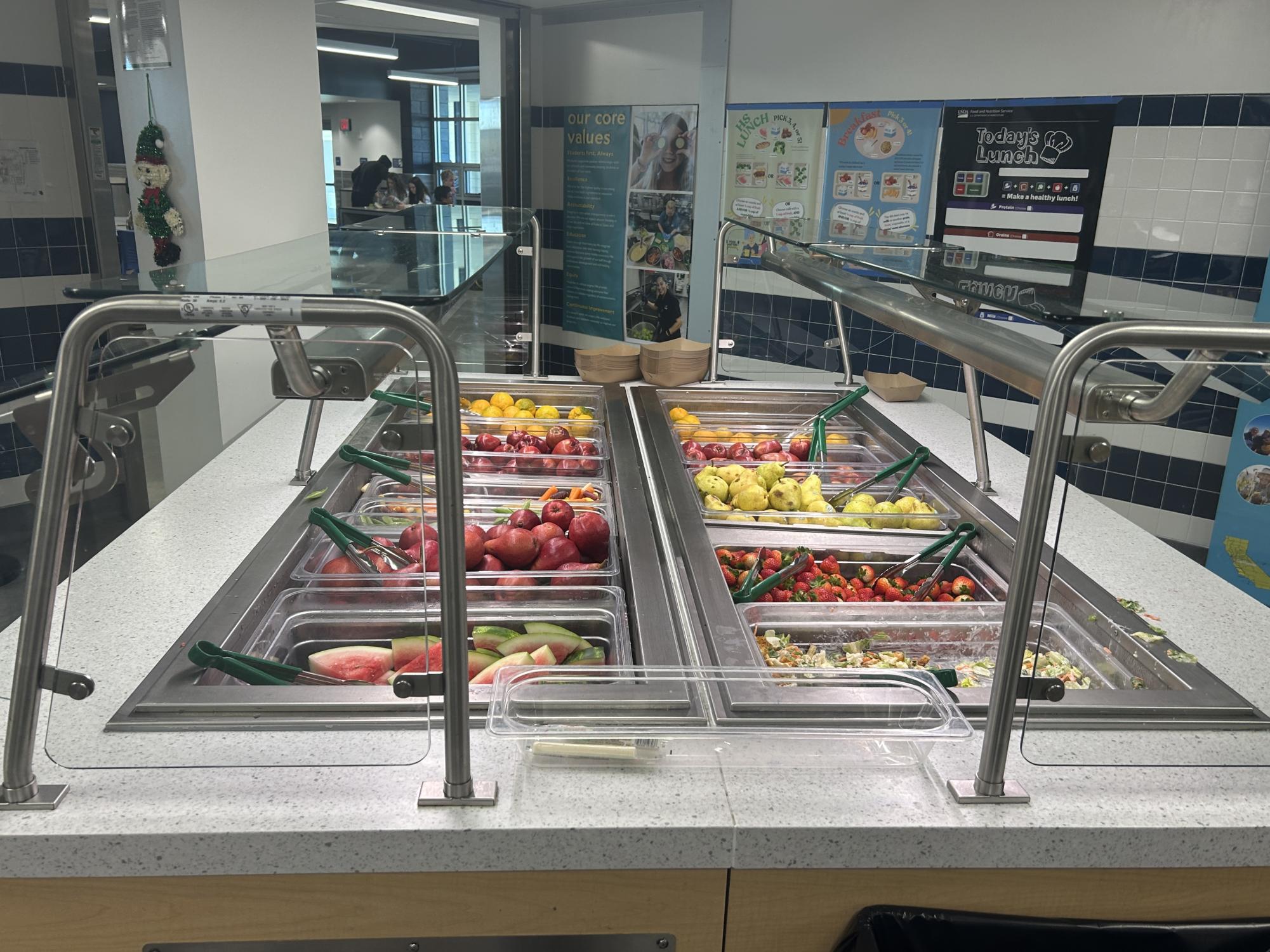
Each day, MBHS students stampede the cafeteria, grab their food, and move on, not stopping to think about how it got to us and all the work, love, and effort that was put in to deliver us high-quality food every day. Inside the MBHS kitchen, chefs are braising beef, pickling onions, pureeing avocados, and baking fresh breads. From menu planning to composting, the process behind our school meals is far more complex, local, and sustainability-focused than most students may realise.
Menu ideas pass through many hands, including chefs, a registered dietitian, district leaders, and meet strict nutrition standards, before they ever reach the kitchen. Once they do, almost everything- from birria taco meat to red lentil dal- is cooked from scratch in MBHS’s central kitchen using local ingredients. One of our two district chefs, Corey Bidwell, who works in our very own kitchen here at MBHS, oversees the creativity of the menu and what kids eat day to day, particularly with high schoolers and middle schoolers. The other chef, a registered dietician, focuses on what can and cannot happen. Due to being a public school, our cafeteria food has strict regulations around sugar, sodium, and whole grains that have to meet state and federal guidelines.
On top of this, MBHS is Eat Real certified, a cutting-edge program that only five school districts in the nation are a part of. This means that our cafe food has even tighter regulations than USDA and state standards, meaning that we serve healthier, more nutritious, and sustainable school meals. This involves serving food made from scratch with minimally processed ingredients, prioritizing fresh and locally sourced ingredients, increasing plant-based options, and reducing waste. Bidwell explains, “Right now, there is no real sugar standard for schools. Which is why in a lot of districts, you’ll see Lucky Charms and maple syrup and all that stuff. But we don’t do that here because we strive to feed kids more nutritious things.” Grains served in the cafeteria are also all at least 51% whole grain, which is why our cafe takes initiatives in serving things like brown rice, rather than white, because it is more nutritious and healthier for our bodies.
Since we are fortunate enough to have fully outfitted kitchens, almost everything served in our cafeteria is made in the cafeteria, which is part of being Eat Real certified. For instance, for the Birria tacos that occasionally are served, the cafeteria receives raw beef from Hearst Ranch and braises it, pickling their own onions, and making an avocado puree. Homemade foods like the sourdough focaccia and Red Lentil Dall are also made in-house from scratch. Cheese in our cheese boxes comes from Cal Poly San Luis Obispo’s creamery, and all beef served in the cafeteria, from our burgers to our brisket, is also from Hearst Ranch, less than 30 miles up the road.
A large portion of our produce is also local, with fruits like apples and pears being some of the only things coming from out of state. A few other things, like the chicken tenders that are served, are also not sourced locally. Even still, quality is a top priority. Bidwell explains that “We choose to buy what’s called whole meat muscle, which is the nicest of the nice chicken tenders that they have. It’s the nicer stuff that we pay more for. But in our program, that’s worth it.” All of these factors lead San Luis Coastal to being one of the top 10% of districts using local ingredients, leading to our schools spending over a million dollars a year with local farms – supporting our local economy.
Every day, the cafeteria plays a guessing game– numbers for how many kids they expect to feed and which type of meal, which always fluctuates. On average, MBHS feeds roughly 350 kids for breakfast and lunch. Ideally, the cafeteria wants every kid to have the same choices, so on an ideal day, there would be one leftover of every optional – though this is extremely difficult to nail all the time. Bidwell also shares that kids eat differently along the coast than they do in SLO. Here, students prefer warm foods, while in SLO, they prefer cold items like sandwiches and cheese boxes.
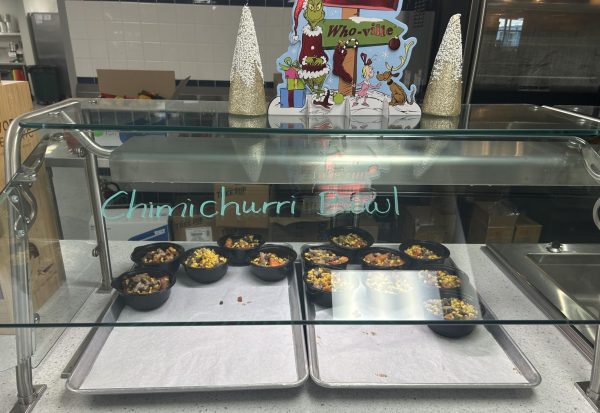
In terms of leftovers, everything that can be kept for two days will be served the next day. Things like pizza do not get used again, so the cafeteria staff tries to get those numbers just right. If there are some slices leftover, the cafe puts the leftovers out for kids and staff. Menu items like tamales, hot dogs, and burgers are leftovers that the school donates to local food banks. MBHS works with multiple programs, including 40 Prado, which is a homeless recovery shelter. These partners pick up multiple times a week, so anything that rolls back into the kitchen is either getting saved or going to a good cause. Part of this is regulation– being required to divert things from the landfill, but Bidwell and our cafeteria “believes in those programs anyway, as we’d rather have food in tummies than in the landfill.”
Just last year, the district introduced green bins, where produce scraps from the kitchen can be composted. We have also moved to a lot of compostable serveware, such as our utensils, napkins, and serving trays. Though we do not have a composting sorting system in place for our cafeteria wastebins, when these items do end up in the landfill, they will at least break down fast and easily. Bidwell explains that, “all this stuff costs extra money, but we believe in saving Planet California. So we invest in that to be more earth-friendly.”
MBHS’s cafeteria isn’t just a place where food is served – it’s where care, creativity, and initiatives collide daily. Whether we notice it or not, every meal is the result of dozens of decisions, experiments, and people working to make lunch better for us. So, the next time you rush the cafeteria doors like a rabid animal, acknowledge the effort and care that it took for the food to reach your tray.
!["PROM" sign at The Penny in SLO. [Elizabeth Davis]](https://mbspyglass.org/wp-content/uploads/2026/05/0025-1200x800.jpg)
![The Statue of Liberty in New York City. [Source: Britannica]](https://mbspyglass.org/wp-content/uploads/2026/05/Statue-of-Liberty-Island-New-York-Bay-1200x800.webp)