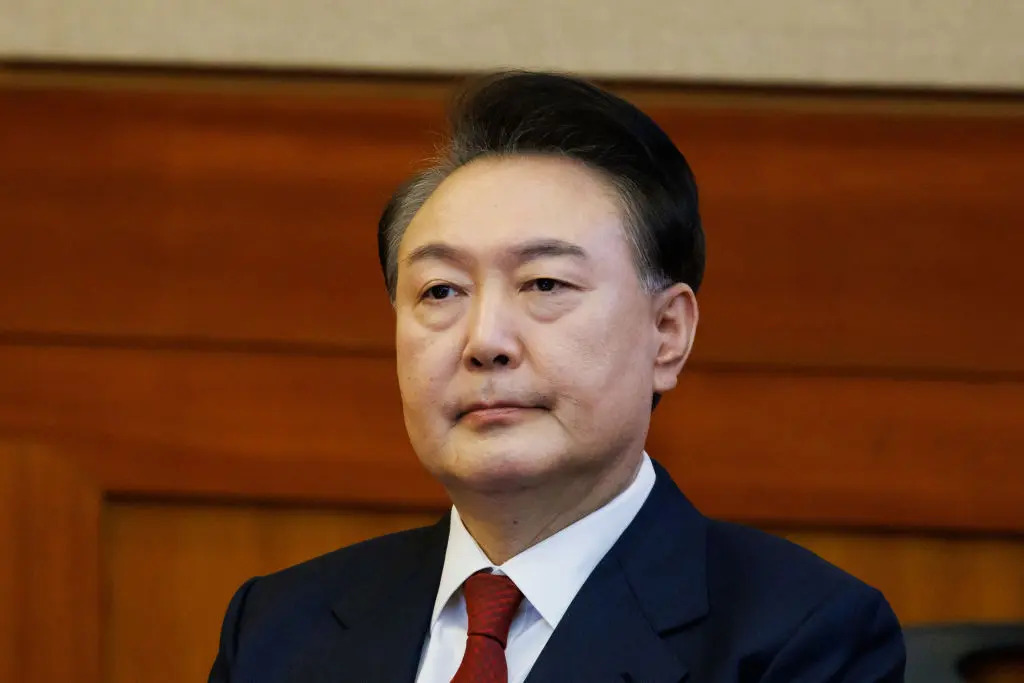
On Thursday, Feb. 19, a Seoul court handed former South Korean president Yoon Suk Yeol a life prison sentence for his role in a major insurrection attempt last year. The judge found Yoon guilty of leading an insurrection by declaring martial law in South Korea and sending troops to surround the National Assembly, the majority of which was controlled by his political opposition. His brief martial law decree, which took place on Dec. 3, 2025, was supposed to forcibly overcome a legislature that was controlled by his liberal opponents, but instead triggered mass protests across the country.
Lawmakers stormed the Assembly and lifted martial law within hours of it being declared. This crisis, which was the biggest politically-motivated incident in the country in decades, ended with Yoon’s removal from office and his conviction.
This comes as a result of his actions in Dec. 2024, when Yoon suddenly declared martial law during a tense political standoff with the National Assembly, claiming he needed emergency powers to fight against what he referred to as “anti-state forces.” Troops were deployed around the Assembly, but lawmakers eventually forced their way inside and voted to lift the order in a matter of hours, which sparked nationwide protests. The South Korean parliament impeached Yoon soon after, and in April 2025, the Constitutional Court formally took him out of office, stripped him of presidential immunity, and allowed him to be criminally prosecuted.
In the insurrection trial, prosecutors charged Yoon with illegally mobilizing the military and police to seize control of the Assembly. They argued that he lacked any sort of legal basis to declare martial law in that situation. In Jan. 2026, the special prosecutors even sought to impose the death penalty on him, saying that his actions threatened democracy. But traditionally, South Korea has technically banned executions since 1997, making life imprisonment the most likely punishment for him.
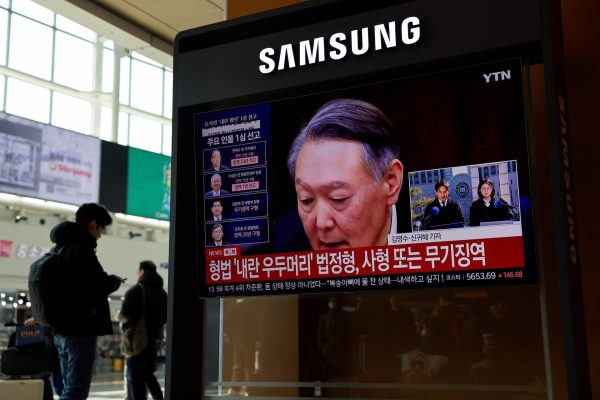
During the trial, Yoon’s legal team made an argument that the martial law declaration was supposed to serve as a warning and not an attempt to seize power permanently. Yoon testified that he expected lawmakers to reverse the order if they disagreed with him, but prosecutors fought back, saying that the deployment of troops was evidence that he was trying to stall the legislature.
Judge Jee Kui-youn sided with the prosecutors, stating that Yoon’s actions were meant to “obstruct or paralyze the Assembly’s activities.” The court also said that Yoon had little remorse for the political and social unrest that followed the martial law declaration. As he delivered the sentence, the judge said that the declaration of martial law resulted in “enormous social costs” and was sufficient grounds for life imprisonment.
The ruling resulted in strong reactions nationwide, with Yoon’s supporters rallying outside the courthouse in Seoul with “Not Guilty” signs. Meanwhile, political leaders commented on the situation quickly. Jung Chung-rae, head of the opposition Democratic Party, said he believed the sentence didn’t go far enough. Meanwhile, Song Eon-seok from Yoon’s conservative People Power Party expressed regret over the crisis and apologized to the public for the turmoil that happened during Yoon’s presidency. Human rights groups also commented.
Amnesty International called the verdict “an important step toward accountability,” emphasizing that “no one is above the law in South Korea, including a former president”.
Yoon’s legal team plans to appeal the decision. If the appeal moves ahead, the case could continue up to higher courts in the coming months. For many people in South Korea, the case is a powerful example of how the justice system responds to times of crisis. The events that started with a late-night declaration of martial law are over, at least for now, with a life sentence for a former president.
![Gas prices being displayed at a Shell gas station as an airplane approaches San Diego International Airport for a landing on April 24.
[Source: Kevin Carter/Getty Images]](https://mbspyglass.org/wp-content/uploads/2026/05/RabadonJet-Fuel-1.png)