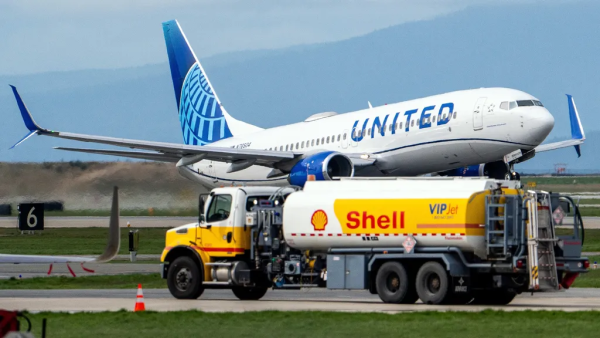
![Gas prices being displayed at a Shell gas station as an airplane approaches San Diego International Airport for a landing on April 24.
[Source: Kevin Carter/Getty Images]](https://mbspyglass.org/wp-content/uploads/2026/05/RabadonJet-Fuel-1.png)
A combination of factors: the ongoing war in Iran, oil refinery cuts, and booming travel demand has driven up fuel prices to record highs and caused shortages around the world. Airlines worldwide are cutting flights and raising ticket prices as jet fuel can make up around 25% of costs. Europe is projected to run short of aviation fuel if oil shipments in the Middle East remain blocked. So far, the U.S. has limited domestic impact flight-wise, but parts of Asia and Europe are already trimming flight schedules.
Jet fuel, also known as aviation kerosene, is a very refined form of kerosene that is used in passenger and cargo planes. It is made from crude oil that’s shipped to refineries, where heating separates it into different products. Jet fuel is one of the middle-distillate products (between diesel and gasoline), usually taking about 10-15% of a single oil barrel’s output. Its freezing point and combustion properties are controlled heavily to make sure planes are able to fly at high altitudes. The fuel is distributed using storage terminals, pipelines, and fuel trucks, which forward it to airports, where it is pumped into airplanes for usage during flights.
Before supply issues became major, domestic jet fuel production in the U.S. roughly matched the demand for it through early 2025. But reduced refinery capacity from issues like plant closures or maintenance drove up consumption to a predicted all-time high this year, while stockpiles fell to alarmingly low historical levels. On a “days of supply” basis, U.S. inventories could plummet to about 21 days’ worth of fuel, which is the lowest since 1963. In other places, regional problems emerged: China went from having a surplus in stock to outright banning jet fuel exports in mid-March 2026 in an effort to protect its own domestic supply and keep local prices low.
Meanwhile, Europe has been losing refining output, with about 400,000 barrels per day closed last year. These factors, not the lack of crude oil itself, are adding to the congestion of jet fuel supply. The narrow supply pipeline is slammed by multiple outside factors, including geopolitical chaos in the Middle East, with attacks on oil tankers and Iran’s strict control of the Strait of Hormuz severely affecting global oil supplies, with the situation heavy enough that the International Energy Agency (IEA) is warning Europe might only have about six weeks of jet fuel left in the tanks if the Strait remains closed.
Refinery wipeouts have also caused increased reliance on imports that are now stuck behind the Strait of Hormuz’s blockade. Another major factor in the current shortage is the peak in demand – everybody wants to fly right now, and the peak of the summer travel season is putting pressure on an already strained supply. Airlines are already burning through their long-term financial reserves, forcing them to buy future fuel at prices that have spiked dramatically by about 84% since late February.
The industry is taking a massive blow to the wallet, with United Airlines warning investors that its per-share profit could drop by 20% if fuel issues stay at these levels. In response, airlines are trimming their flight schedules instead of grounding entire fleets. Lufthansa has already axed 20,000 short-haul flights through October to save fuel, and KLM removed 80 round trips from its schedule. Airlines in Nigeria were nearly grounded entirely after facing a 270% price jump. For the everyday traveler, this means pure pain at the checkout, with United’s CEO anticipating that fares could climb up by around 20%, with other airlines in the U.S. like Alaska Airlines hiking up checked-bag fees to manage costs (Alaska Airlines increased its fee from $5 to $10 per checked bag). Carriers are also ditching low-demand and midweek flights to conserve fuel, reducing about 0.5 to 2% of overall summer capacity domestically. Besides fuel limits forcing airlines to reduce flights, lawmakers in governments around the world are scrambling to keep the logistics running, with the UK government pushing for domestic refineries to maximize jet fuel production, and European regulators speeding up approvals to allow alternative fuels to bring down constraints.
The only immediate benefit of the ongoing jet fuel crisis is a small and temporary dip in carbon emissions because of cancellations, but the ridiculous cost of fossil fuels is making Sustainable Aviation Fuel (SAF) look much more viable to the commercial aviation industry. Right now, SAF meets less than 1% of demand and costs about twice as much as regular jet fuel, but the current situation is accelerating considerations about adopting it. In the short term, many airlines expect to mostly preserve the main summer holiday travel schedule, but it will undoubtedly cost more for the consumer. If the conflict in the Middle East continues to escalate, the world could see serious fuel rationing and worsened flight cuts by mid-2026, and even if geopolitical tensions relax and the Strait of Hormuz reopens, repairing the damage done to the fuel inventory and oil industry is going to take months or even years. For now, travelers should be smart about their travel decisions and take steps to reduce costs and wait times, and be mindful of schedule changes.
Sources: AP News, Energies Media, The Independent, IATA, Conde Nast Traveler, EIA, Reuters