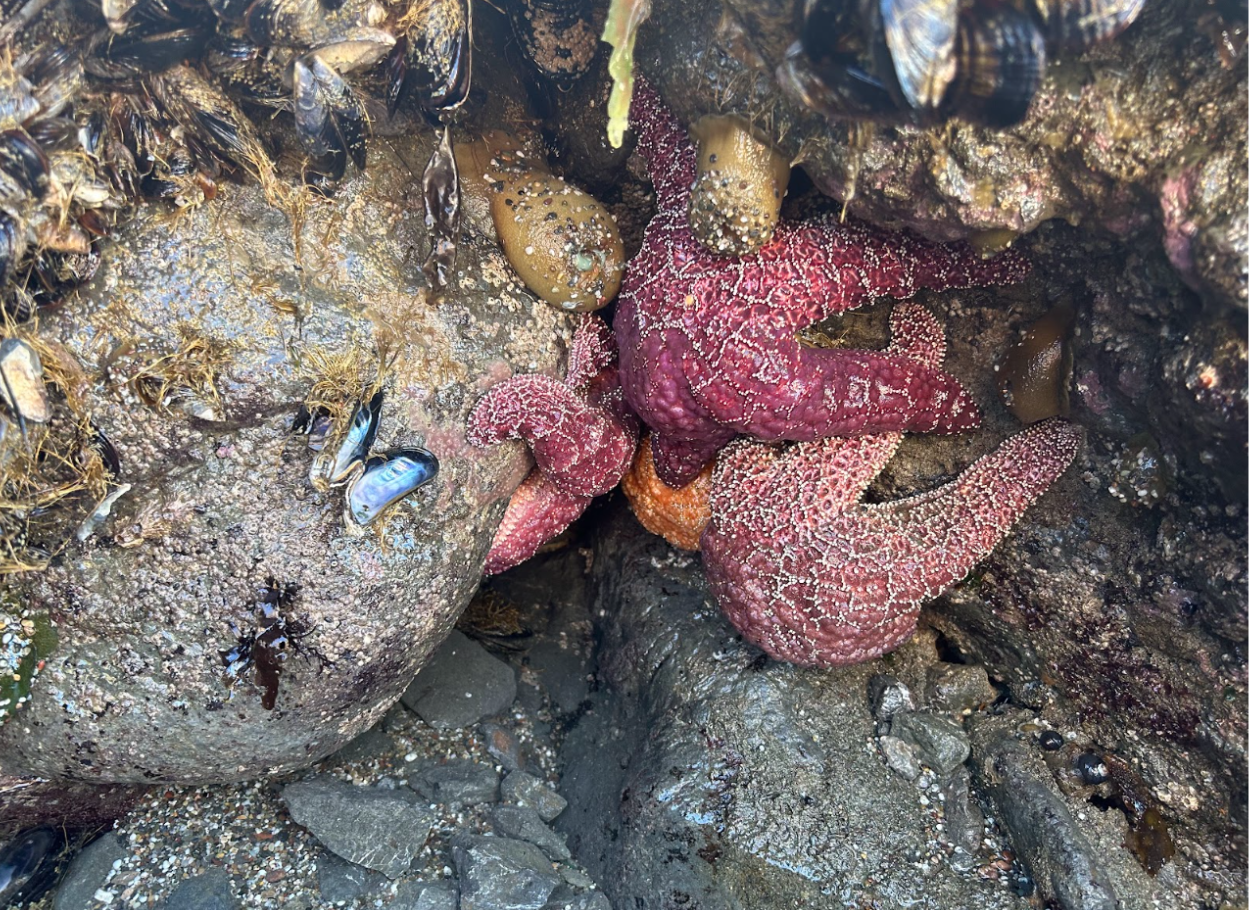

At low tide on the Central Coast of California, the ocean steps back each day to reveal a world hidden beneath the crashing waves. A world that is made of slick rock, saltwater puddles, and creatures tough enough to survive both crashing waves and blazing sun. Around Los Osos, Morro Bay, and Cayucos, a handful of tide pool spots stand out for both their scenery and what you can find if you slow down and look closely.
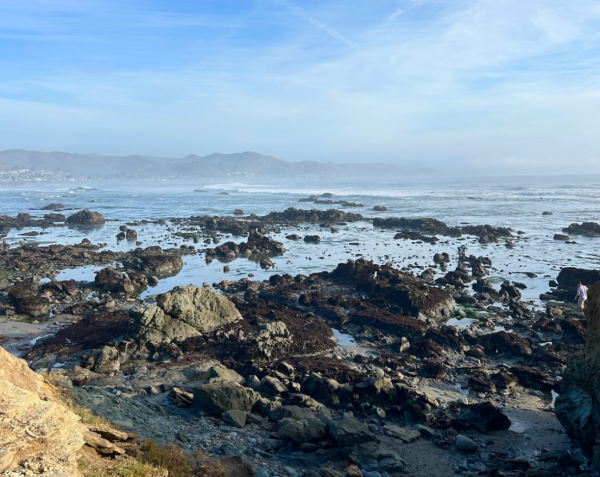
(Abbie Leitner-Woolf)
If you want the easiest introduction, start at the Cayucos Bluff tide pools. The bluff-side shelves and pockets are close to town and relatively quick to reach, which makes them popular for families and first-time tide poolers. In the shallow pools here, it’s common to spot sea anemones tucked into cracks, barnacles and mussels clinging in tight clusters, and quick little shore crabs darting under algae. Though the path to the tidepools is short and flat most of the way, some of the treks down to the beach from the bluffs can be steep and rocky.
For a wilder feel, Hazard Reef Trail in Montana de Oro is worth the extra trek out. The route takes more time than the Cayucos bluffs, but the payoff is worth it for the boundless amount of
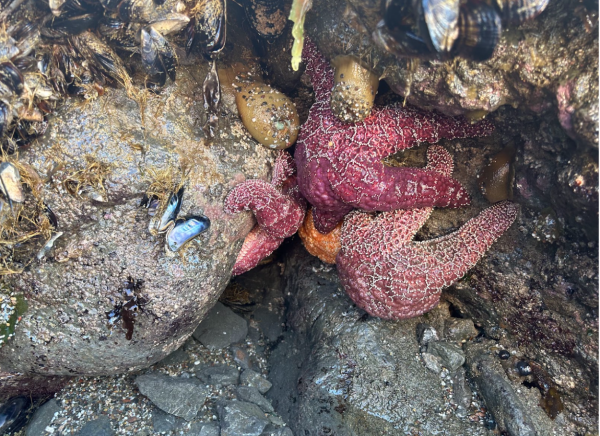
pools to explore. The layered rocks and deeper pockets hold a colorful sight to see. When conditions are right, you can see bright orange and purple sea stars, chitons, limpets, and anemones sealed to stone like suction cups. You might also spot an occasional purple urchin wedged into a crevice. Because the tidepools are more expansive here, you’re more likely to have entire sections of shoreline to yourself, but the downside is the uneven footing, slippery rock, and the need to plan around the tide so you’re not rushing back.
Also down in Montaña de Oro, the tide pools reached via the South Dune Trail combine the best parts of both: a beautiful coastline and a real sense of adventure. It’s a longer walk than both Hazzard Reef and the Bluffs.
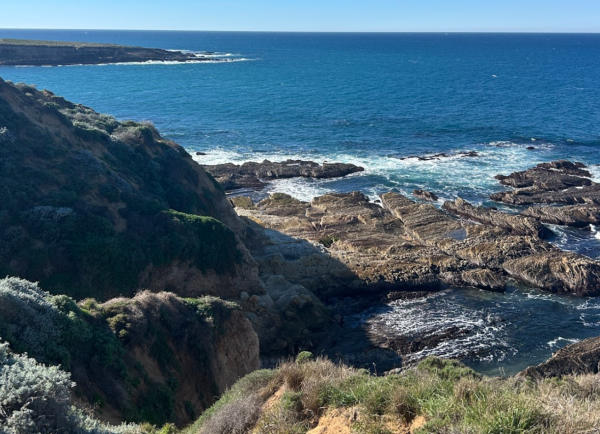
Trekking up and down dunes, there are numerous spots to reach isolated coves where you can have the tidepools all to yourself. The intertidal zone here is loaded with life—sea slugs, sea stars, hermit crabs, sea anemones, and fish like tidepool sculpin flickering through the darker pools. It’s also a popular stretch for fishers, especially near accessible rocky points. The upside is you’ll often see locals who know the coast well; the downside is that crowded high-use areas can mean more noise and less “quiet watching,” especially on weekends.
Further up the road, at San Simeon State Beach, low tide
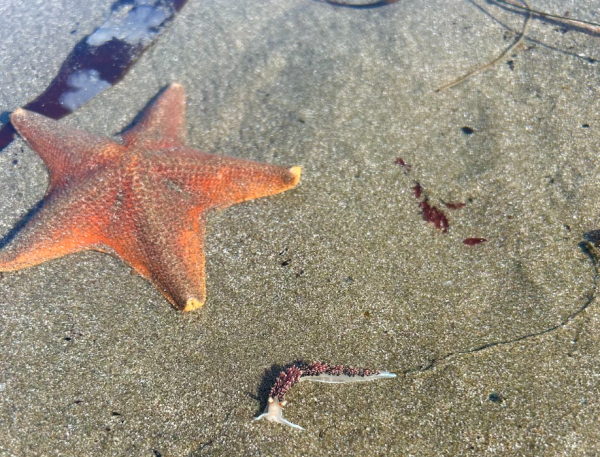
(Abbie Leitner-Woolf)
reveals expansive beach and clusters of rock harboring a plethora of life. Here, the tidepools are less well-known, so at low tide, you will often have the whole beach to yourself. At this beach, you will find plenty of sea stars, anemones, and, if you’re lucky, nudibranchs.
Wherever you go, the rules are simple: check the tide chart, wear shoes with grip, step on bare rock (not on living carpets of mussels or anemones), and leave everything exactly where you found it. In a place where the ocean changes by the minute, the best tide pooling isn’t about taking souvenirs, it’s about noticing what’s already there, holding on, and thriving.


![Gas prices being displayed at a Shell gas station as an airplane approaches San Diego International Airport for a landing on April 24.
[Source: Kevin Carter/Getty Images]](https://mbspyglass.org/wp-content/uploads/2026/05/RabadonJet-Fuel-1.png)