![Timothée Chalamet as Marty Supreme. [Source: Getty Images]](https://mbspyglass.org/wp-content/uploads/2026/01/WhiteMarty-Supreme-Feature.jpg)
Josh Safdie’s “Marty Supreme” is a rollercoaster of emotions, with no clear indication of when it will end, holding viewers captive with the sheer amount of chaos unfolding. Set in 1950s New York, the film follows Marty Mauser (played by Timothée Chalamet), a table tennis hustler whose sole goal is to reach the top, no matter the cost. Mauser’s rise to accomplish his dreams involves physical fights, manipulating people to give him money, seducing a high-class celebrity, stealing, and gunfire, doing whatever he can to get his way.
While the film is meant to be viewed as someone doing whatever they need to achieve their dreams, and that chaos will ensue if you have an excuse for everything and manipulate those around, men across various social media platforms are idolizing Mauser’s tactics.
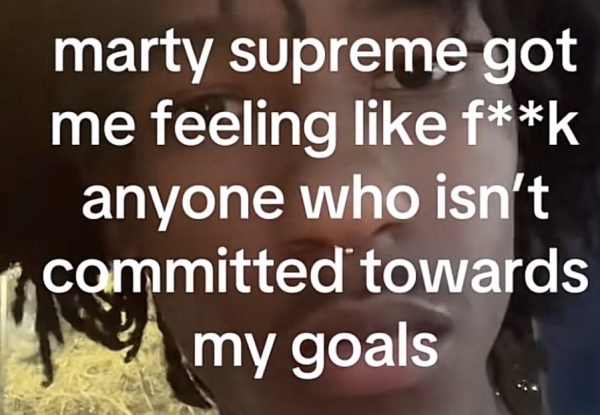
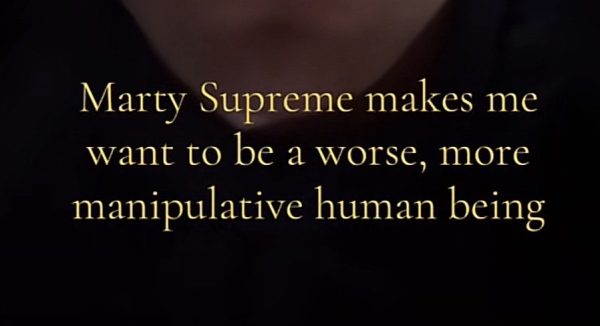
All across TikTok, men are posting videos with text such as, “Marty Supreme got me feeling like f**k anyone who isn’t committed towards my goals,” posted by @philheywsp, and, “Marty Supreme makes me want to be a worse, more manipulative human being,” posted by @timmyfisher_. While it wasn’t Safdie’s intention to create yet another fandom of boys who take the film at face value and interpret it according to their own beliefs, it has put the internet in a frenzy over the film.
Throughout the film, Marty continuously doesn’t have a care in the world about other people surrounding him, the woman who is about to give birth to his child, the money he steals from people to reach competitions, and especially, anything that doesn’t stroke his ego. The audience is met with the dilemma of constantly understanding he’s a narcissistic character, but also making them root for the villain, even in times when they feel morally wrong. It’s possible that people could fail to see that Marty’s “dream big” philosophy is only hurting him, and instead, are viewing it incorrectly. While “dreaming big” isn’t at all hurtful, people taking it as you have to step on whatever is in your way to make it to the top is.
At the end of the film, Marty finally realizes he can’t hustle his way out of his son being born, no matter how hard he tries; instead, he embraces it, and it reshapes who he is. Safdie has specifically aired out in multiple interviews that you are not meant to like Marty, and that he’s rather an example of when Safdie himself had a child, and his life altered. “Having a kid is like—[Marty’s] one dream had to end so the
other one could begin. It’s seeing [Marty] actually go from boy to man,” said Safdie in an interview with Frazer Thrape from GQ Magazine.
Looking through men’s TikTok’s postings about how much they admire the character, and need to start manipulating to get their way more often, it completely takes away from Safdie’s goal for the film. Marty was never meant to be an example of anyone to idolize; he was meant to be seen as a reality check.
“Marty Supreme so real cause sometimes you just have to be a narcissistic, manipulative, sociopath to make s**t shake,” posted by @.c4rlosss_ on TikTok.
After Marty’s everlasting pursuit of table tennis, and how he would do just about anything to keep playing, he meets with his own reality: having a child and having to grow up. We, the audience, are also met with our own reality once we reach the end of the movie. Marty is a morally ambiguous character who is not to be followed or embraced, but to be viewed as an example of life’s cunning ways of getting to us.