One of the most popular streaming services is Netflix, with thousands of different shows and movies available. Netflix also has a group labeled Netflix Original Series, which are only available on Netflix and have been around for a long time. One series is called Dragons: Race to the Edge, which has been on Netflix for 10 years. This show has six seasons and is attached to the “How to Train Your Dragon” franchise. Netflix has announced it will be taken down on Jan. 1, 2028, due to their license with Dreamworks Studios expiring, making this show disappear for good. The first season was released in 2015, and the last season was released in 2018.
During this time, the show has impacted “How To Train Your Dragon” fans and given them characters that are given more depth in this series than shown in the movies. The main characters of the franchise are Hiccup, Astrid, Fishlegs, Snotlout, Tuffnut, and Ruffnut. In the movies, most of these characters are sidelined to give more emphasis to the bond between Hiccup and his dragon Toothless.
Throughout the show, each character was given episodes that focused on that specific character. It dove into what each character faces and their individual bonds with their dragons. For example, Snotlout and Hookfang have a relationship that is overlooked in the movies. Their bond is portrayed as nothing but a dragon and his rider coexisting. However, in the show, we see that Hookfang is a wild dragon that often makes Snotlout’s daily life harder and is constantly teasing Snotlout. Throughout the series, we see their bond grow and understand that they care for one another deeply, and their relationship is shown through unique ways.
Snotlout is portrayed in the movies as an arrogant bully with no personality other than chasing after women. In episodes centering on him, we see that he is desperate to be wanted and revered due to his father never showing him any love and always making Snotlout feel worthless. Hiccup’s morals are tested throughout the series when he has to deal with dangerous dragons that he may have to trap or harm in order to protect himself, his friends, and their own dragons. It shows real-life struggles that we face when we build up our morals and decide when to stick by them.
An important plot point in the series is when the dragon hunters started to train their own dragons. The dragons that the hunters choose to use are called singetails, which are a powerful dragon species. Singetails have few weaknesses and can meet almost any dragon on the battlefield. While the other riders were able to accept that they had to harm the singetails in order to survive, Hiccup struggled with that notion since he lived off of protecting all dragons. Two episodes were dedicated to exploring how Hiccup dealt with his morals being challenged and how he overcame that as well. It taught watchers that it is natural for things to conflict with their beliefs and that you should always work through that conflict.
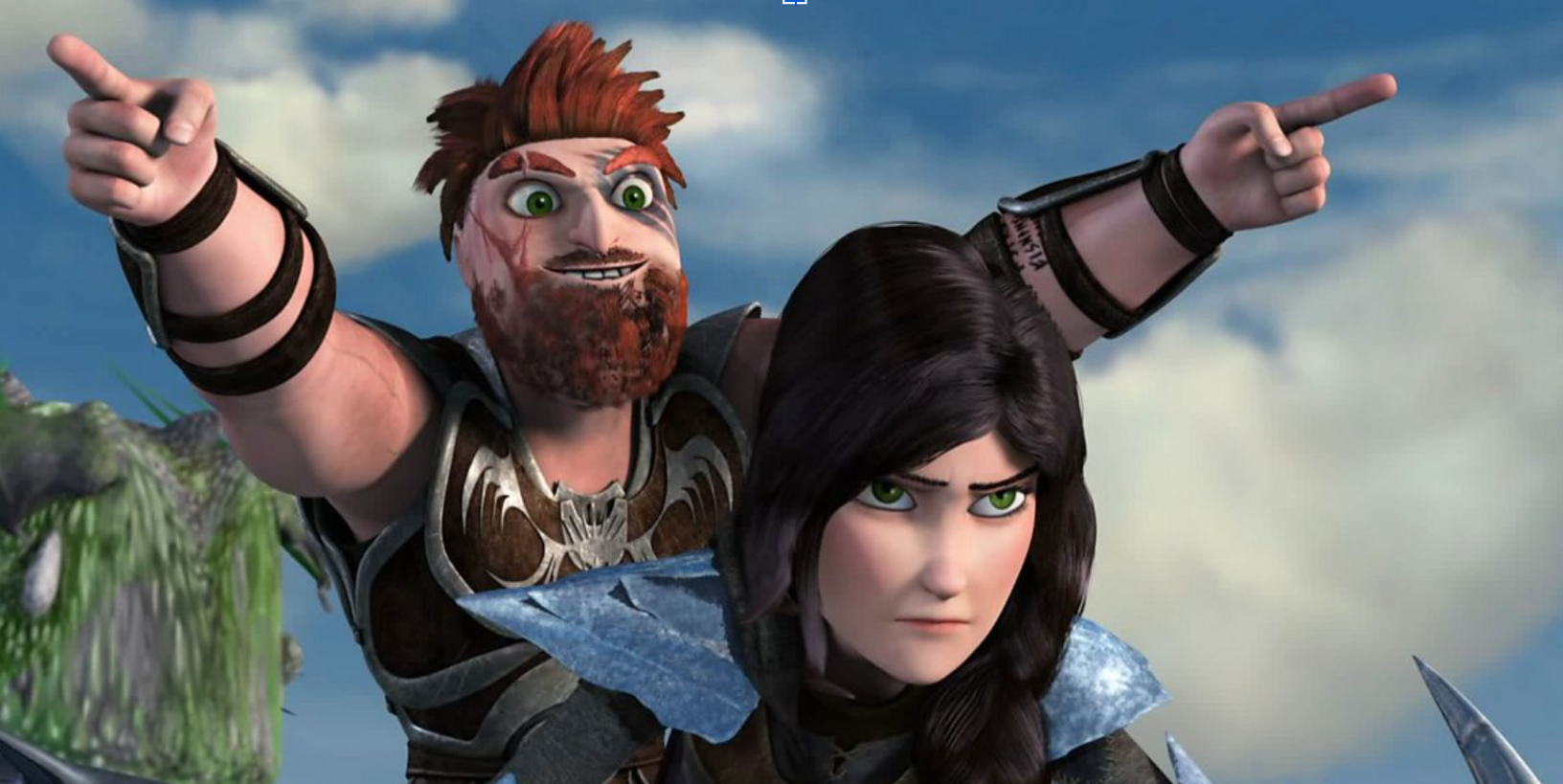
One of the largest redemption arcs happens in this series with a character named Dagur. Dagur spent a large amount of the series trying to kill Hiccup out of revenge after he was sent to prison. Dagur changes once his sister is taken captive by the dragon hunters, and he learns to be a better person having been isolated on an island.
This arc jumps into the love we have for family and wanting to live up to our parents’ standards. After Dagur changes, he tries to find his father to make amends, but ends up finding his body instead. Dagur was a wayward child, but he always wanted to make his dad proud. His story follows that struggle and turns into being the best brother he can be for his sister, Heather. Important conflicts, emotions, and feelings are presented in a way that watchers can feel close to the dragon riders and understand the message on a deeper level. Without the series, the movies would be meaningless and empty. It would have bland characters with no motives or experiences. When the series disappears, it will be an era of love, grief, pain, happiness, fear, self-identity, and family that disappears along with it. It will be a message to “How To Train Your Dragon: fans that it is time to grow up, as their childhood will no longer be relevant enough.