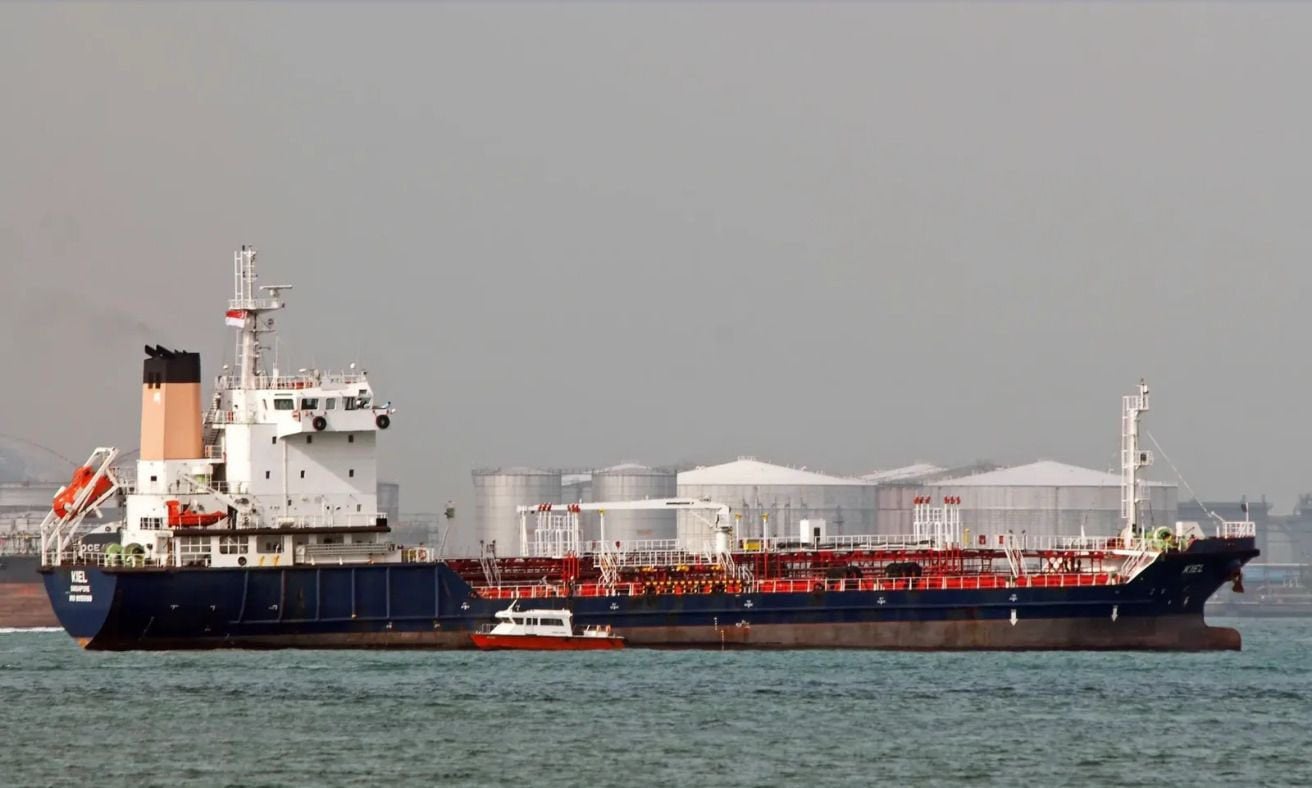
Iran has an operation called ‘ghost fleet’ or ‘shadow fleet,’ which is made up of 180 to 300 old ships. These ships hide their identity so Iran can smuggle oil despite the U.S. sanctioning them. They smuggle the oil mainly to places like China, who take 80%, as well as Venezuela and Syria. One trick they use is taking the names of scrapped ships to get past the tracking system. They use deceptive tactics to avoid being spotted, such as disabling the AIS trackers, “flag hopping” or switching nations, and painting fake names on the ships.
To avoid being seen at all, they do ship-to-ship transfers in the dark. There are also “ghost ships” that are fast, semi-submersible, Zolfagher-class boats. This fleet of vessels has been linked to supplying fuel for illegal activities, such as supplying jet fuel for air strikes in Myanmar. They often hang different flags and use fake documentation to pass any inspections.
On Feb. 5, the Indian Coast Guard intercepted three of the ghost ships; they were intercepted around 100 nautical miles west of Mumbai within India’s Exclusive Economic Zone (EEZ). The names of the three ships were Stellar Ruby, Asphalt Star, and Al Jafzia. They are suspected of having been doing a ship-to-ship transfer. All the ships were carrying U.S.-sanctioned crude oil and fuel.
The crews and ships were detained and taken to Mumbai for investigation, and all of the staff, including the masters, engineers, and crew members, were named in a First Information Report (FIR). After the Indian Coast Guard intercepted the trade, they deployed 55 ships and 10 to 12 aircraft to have complete surveillance of the Arabian Sea region.
This follows a Venezuelan ship that was captured on Dec. 17, 2025, by the U.S. This started even more tension between the U.S. and Venezuela. President Donald Trump has set up a naval blockade to stop the sanctioned oil ships from leaving Venezuela. Venezuela has one of the largest oil reserves in the world, and its government heavily relies on the trade of its oil. However, the U.S. has a sanction on that oil, which makes it harder for Venezuela to export its oil.
President Trump set up the sanctions in 2019 in his first term as President. The year he set up those sanctions, the amount of barrels being exported dropped by more than half, going from 1.1 million to 495,000. In 2025, however, the amount of barrels of oil had increased and gone up to 920,000 a day.


![Gas prices being displayed at a Shell gas station as an airplane approaches San Diego International Airport for a landing on April 24.
[Source: Kevin Carter/Getty Images]](https://mbspyglass.org/wp-content/uploads/2026/05/RabadonJet-Fuel-1.png)